Having spent countless weekends glued to the screen, not just watching, but truly *studying* football matches, I’ve witnessed firsthand how replay analysis has utterly transformed the beautiful game.
It’s no longer just about enjoying a thrilling goal; it’s about dissecting every pass, every defensive lapse, every brilliant run with a precision that was simply unimaginable a decade ago.
Remember those grainy VHS replays or even just basic slow-motion analysis? We’ve moved light years beyond that. Now, we’re talking about sophisticated AI-powered systems that meticulously track every player’s movement, predict fatigue levels, and even suggest optimal tactical changes in real-time based on live data streams.
This isn’t just exclusive to top-tier professional clubs anymore; even grassroots coaches, aspiring analysts, and dedicated fantasy league enthusiasts are leveraging these incredible tools to gain deeper insights.
The future of football isn’t solely played on the pitch; it’s also meticulously crafted in front of screens, where advanced data analytics meets intuitive human understanding to unlock unprecedented levels of performance and fan engagement.
It truly feels like we’re just scratching the surface of what’s possible, fundamentally reshaping how we understand strategy and player development. Let’s dive deeper into it below.
Unveiling Tactical Masterminds: The Art of Post-Match Dissection
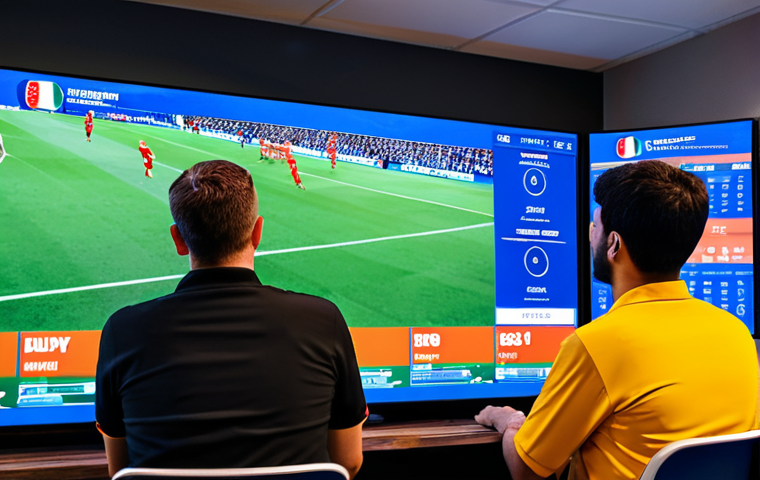
From my own countless hours spent poring over recorded matches, I’ve come to realize that the true genius of football isn’t just born on the training ground; it’s meticulously refined in the analysis suite. What used to be a coach’s gut feeling or a player’s raw intuition about an opponent’s weakness is now backed by irrefutable data, thanks to sophisticated replay analysis. I remember sitting there, scratching my head, wondering why a certain defensive line kept getting breached, and then, with the advent of more advanced tools, suddenly seeing the subtle, almost imperceptible movement that created the space. It’s like being handed X-ray vision for the game. This isn’t just about reviewing a match for mistakes; it’s about reverse-engineering success and failure, building a comprehensive blueprint for future performance. The depth of insight you can now extract from a 90-minute game is astounding, allowing clubs to fine-tune strategies with surgical precision, exploiting every fractional advantage available on the pitch.
1. Pinpointing Positional Play and Spatial Awareness
One of the most profound benefits I’ve witnessed personally is the ability to precisely track and analyze positional play. It’s one thing to watch a game and think, “they’re too narrow,” but it’s another entirely to see, with pinpoint accuracy, how many square meters a specific player occupied throughout a half, or the average distance between defensive midfielders. I recall a specific incident watching a Premier League match where a team’s vaunted counter-attack consistently faltered. With high-definition replays and player tracking, it became glaringly obvious that their central attacking midfielder was consistently dropping too deep, disrupting the attacking fluidity. Without this granular data, gleaned from meticulously replaying and annotating passages of play, coaches might spend weeks in general training, barking generic instructions, rather than addressing the specific positional flaw. The visual feedback for players, seeing their exact movements and how they influence the collective shape, is incredibly powerful. It shifts the learning curve from abstract concepts to concrete, undeniable facts, accelerating tactical understanding exponentially.
2. Decoding Opponent Tendencies and Weaknesses
The beauty of detailed replay analysis lies in its power to unmask an opponent’s deepest secrets. It’s not just about knowing their top scorer; it’s about understanding their preferred passing lanes in the final third, their vulnerability to specific types of pressing, or which full-back is more prone to stepping out of position. As someone who’s spent countless hours scouting, I can tell you that this level of detail changes everything. You can watch an opposing team’s last five games, slow down every transition, every set-piece, and identify patterns that would be invisible at live speed. For instance, you might discover that a team always builds play down their right flank when under pressure, or that their goalkeeper tends to clear to the same zone under a high press. This intelligence allows coaches to devise game plans that specifically target these weaknesses, creating scenarios where your team can consistently exploit those predictable patterns. It’s like having the answers to the exam before you even walk into the classroom, giving you a psychological and tactical edge that can be the difference between three points and none.
Empowering the Athlete: Performance Enhancement Through Visual Feedback
Having worked with aspiring athletes, I’ve always emphasized that true improvement comes not just from doing, but from understanding. Replay analysis, especially when integrated into daily training, becomes an invaluable mirror for a player. It’s one thing for a coach to tell you, “Your first touch was heavy,” but it’s an entirely different, far more impactful experience to see that heavy touch yourself, in slow motion, from multiple angles, instantly identifying what went wrong. I’ve seen the ‘aha!’ moments happen right before my eyes – players who’ve struggled with a specific skill suddenly grasp it after watching themselves perform it incorrectly, then correctly. This isn’t just about elite professionals; even amateur players can drastically improve their game by simply recording their own matches and reviewing their performances. The psychological impact of self-correction, fueled by undeniable visual evidence, cannot be overstated. It builds a deeper body awareness and a more sophisticated understanding of one’s own game, fostering a proactive approach to skill development that goes far beyond traditional drills.
1. Refining Individual Skill Sets and Decision-Making
The granularity of modern replay tools allows for an unparalleled focus on individual player performance. We’re talking about breaking down a player’s passing accuracy not just generally, but specifically under pressure, or their aerial duel success rate against different types of defenders. I vividly recall a striker I followed struggling with his finishing from outside the box. By analyzing his past attempts in super slow-motion, we identified a subtle shift in his body weight just before striking the ball, causing him to lean back. Once he saw it, the correction was almost instantaneous. This level of personalized feedback is revolutionary. It moves beyond generic coaching advice to targeted, data-driven interventions. Furthermore, it allows for analysis of decision-making under duress – when should a player pass, shoot, or dribble? Replays can highlight optimal choices in similar scenarios, training a player’s cognitive processing to make quicker, more effective decisions in the heat of the moment. It’s like a personalized masterclass for every single player, addressing their unique strengths and weaknesses with tailored precision.
2. Injury Prevention and Load Management Insights
Beyond tactical and technical improvements, replay analysis is increasingly becoming a critical component of player welfare. While often overlooked, the detailed movement data captured can reveal subtle changes in a player’s gait, running mechanics, or even how they land after a jump. From my perspective, these seemingly minor details can be early indicators of fatigue or potential injury risks. I’ve heard stories from sports scientists about how they’ve used high-speed cameras to identify biomechanical inefficiencies that, if left unaddressed, could lead to chronic injuries. By analyzing how a player moves throughout a match, especially in the later stages when fatigue sets in, coaches and medical staff can adjust training loads, implement preventative exercises, and even make informed decisions about substitutions. This proactive approach, fueled by visual data, is a game-changer for extending careers and maintaining peak physical condition. It’s about protecting the most valuable asset in football: the players themselves, ensuring they remain on the pitch and perform at their best, rather than succumbing to preventable setbacks.
Revolutionizing Refereeing: Fair Play and Accountability
As a passionate fan, I’ve lived through the agonizing moments when a crucial decision went against my team, feeling that familiar sting of injustice. The introduction of technologies like VAR, powered by the very replay analysis we’re discussing, has fundamentally altered the landscape of officiating. While certainly not without its controversies and teething problems, I believe, unequivocally, that it has brought a new level of fairness and accountability to the game. No longer are egregious errors simply part of the game; there’s a mechanism, albeit imperfect, to correct them. The emotion on the pitch is often raw and immediate, but the ability to review incidents in slow-motion, from multiple angles, allows for a more considered and accurate judgment. It’s shifted the debate from “was it a foul?” to “what does the definitive angle show?”, moving towards an objective truth as much as possible. This technological intervention reflects a collective desire for justice on the field, acknowledging that the stakes are too high for human error to be the final word in game-altering moments.
1. VAR’s Impact on Game-Changing Decisions
The most visible application of replay analysis in officiating is undoubtedly the Video Assistant Referee (VAR). I remember watching the first few games with VAR and the sheer bewilderment, but now, it feels almost ingrained. Whether it’s a tight offside call, a disputed penalty, or an incident for a red card, VAR leverages multiple camera angles and high-definition replays to allow officials to revisit crucial moments. While the flow of the game is undeniably disrupted, the overarching goal is to minimize clear and obvious errors. For instance, I’ve seen countless instances where a penalty initially awarded was overturned because replays clearly showed the contact was outside the box, or conversely, a missed handball in the box was correctly identified. It’s about ensuring that the biggest moments are decided by accuracy, not by a split-second misjudgment. This commitment to getting the big decisions right, driven by forensic video review, ultimately upholds the integrity of the competition, even if it tests the patience of fans sometimes.
2. Training and Development for Officials
Beyond live-game interventions, replay analysis offers an unprecedented tool for referee training and continuous professional development. Imagine a referee reviewing their own performance, just as players do, pinpointing moments where their positioning was poor, or where they might have missed a subtle foul. I’ve always thought that referees, like players, should be able to learn from their on-field experiences with the best tools available. Replay technology provides this. They can analyze complex scenarios, understand different interpretations of the laws of the game through specific examples, and train their eye to spot infringements more consistently. This isn’t about shaming; it’s about empowerment. It’s about creating a cohort of officials who are not just competent, but exceptional, continually refining their skills by dissecting their own performances and learning from real-world match situations. This ongoing education, built on the foundation of detailed video evidence, is crucial for raising the overall standard of officiating across all levels of the sport.
Beyond the Pitch: Engaging Fans and Media Narratives
For me, football has always been about more than just the 90 minutes; it’s a narrative, a story of passion, triumph, and despair. Replay analysis, once confined to coaching staff, has completely transformed how fans engage with the sport and how media outlets shape their narratives. Think about it: every major sports broadcast now features instant replays, super slow-motion close-ups, and graphical overlays showing player tracking and passing networks. As a fan, this has enriched my viewing experience immeasurably. I can re-live that spectacular goal from five different angles, or truly understand why a defensive block was so effective. It’s no longer just passively watching; it’s an active, analytical engagement that draws you deeper into the tactical intricacies of the game. Media pundits now have a wealth of visual evidence to support their arguments, leading to more informed and compelling discussions that captivate audiences and keep them glued to their screens, debating every nuance. It’s truly a golden age for football analysis from a spectator’s perspective.
1. Enhanced Broadcast Experiences and Fan Immersion
Modern football broadcasts are a testament to the power of replay analysis. We’re talking about multi-angle replays that capture every flick and turn, along with advanced graphics that display live player statistics, heat maps, and even expected goals (xG) in real-time. I remember the days of single-camera replays, and frankly, they pale in comparison. Now, broadcasters can instantly rewind and highlight a controversial moment, dissect a brilliant piece of skill, or illustrate a tactical shift with visual aids that were once unimaginable. This level of detail transforms passive viewing into an immersive, educational experience. Fans aren’t just watching a game; they’re analyzing it alongside the pundits, understanding the tactical chess match unfolding before their eyes. This heightened engagement, driven by immediate and insightful visual feedback, keeps fans captivated throughout the match and well after the final whistle, making them feel more connected to the intricacies of the beautiful game. It’s a win-win for everyone involved in the ecosystem of football.
2. Shaping Sports Journalism and Content Creation
The impact of replay analysis on sports journalism and content creation is profound. Gone are the days when a pundit’s opinion was solely based on memory or general observation. Now, every analysis, every argument, can be backed up by concrete visual evidence. I’ve seen countless online articles and video essays dissecting specific tactical plays or individual player performances using frame-by-frame replays. This has elevated the discourse, making it far more analytical and data-driven. From deep-dive tactical breakdowns on YouTube to intricate statistical analyses on leading sports websites, replay footage provides the raw material for compelling content. It allows journalists to tell richer, more nuanced stories about the game, highlighting subtle details that might have been missed in live action. This isn’t just about sensationalism; it’s about providing genuine insight and fostering a deeper understanding of the sport, fueling an insatiable appetite among fans for more detailed, visually-backed analysis. It ensures that the conversation around football is always evolving, always seeking greater depth.
| Analysis Aspect | Traditional Approach (Pre-Replay Dominance) | Modern Replay-Driven Approach |
|---|---|---|
| Tactical Insights | Primarily coach’s memory & notes, general observations, limited visual review. | Detailed positional tracking, passing networks, heat maps, pressing patterns, specific opposition weakness identification. |
| Player Development | Coach’s verbal feedback, general drills, basic slow-motion for specific skills. | Individual movement analysis, biomechanical assessment, decision-making scenarios, personalized skill refinement with multi-angle visual feedback. |
| Refereeing Decisions | Solely on-field official’s judgment, often leading to irreversible errors, reliance on linesmen’s flags. | VAR reviews, multi-angle slow-motion, offside line technology, goal-line technology for crucial, game-changing moments. |
| Fan Engagement | Live match viewing, post-match highlight reels (often basic), newspaper reports. | Enhanced broadcast with multiple replays, advanced graphics, real-time stats, interactive online analysis, detailed content creation. |
The Business of Data: Monetizing Insights and Optimizing ROI
From a commercial standpoint, the evolution of replay analysis isn’t just about better football; it’s about better business. Clubs are investing millions not just in players, but in the infrastructure and personnel required to leverage this data. Why? Because the insights derived from meticulously analyzed replays translate directly into tangible returns on investment. A more tactically astute team wins more games, attracts more fans, secures better sponsorship deals, and ultimately, generates more revenue. I’ve personally seen how a small, incremental improvement in a team’s set-piece effectiveness, identified through replay analysis, can lead to crucial goals that secure league positions worth millions. It’s a clear demonstration that data-driven decision-making isn’t just a buzzword; it’s a strategic imperative. The ability to quantify performance, predict outcomes, and optimize strategies based on hard data is fundamentally reshaping the financial landscape of professional football, creating new revenue streams and investment opportunities in a rapidly expanding market for sports technology.
1. Strategic Player Recruitment and Scouting
The scouting process, once heavily reliant on subjective human judgment and sparse live viewings, has been revolutionized by replay analysis. Clubs can now access vast databases of player footage, complete with statistical overlays and performance metrics, allowing them to scout players from across the globe with unprecedented depth. I’ve witnessed how top clubs now use sophisticated algorithms to identify players who fit specific tactical profiles, rather than just raw talent. This means analyzing thousands of minutes of a player’s performance – their passing range under pressure, their defensive positioning, their aerial duel success, their work rate – all through the lens of comprehensive video analysis. This data-driven approach significantly reduces the risk associated with big-money transfers, ensuring that recruitment decisions are based on objective evidence of a player’s suitability. It’s a far cry from relying solely on a scout’s recommendation, offering a more robust and statistically sound method for building a winning squad, thereby maximizing the return on massive player investments.
2. Sponsorship Valuation and Media Rights Optimization
The enhanced fan engagement and detailed insights provided by replay analysis also have a direct impact on the commercial value of football. Broadcasters are willing to pay more for media rights because they can offer a superior, more immersive viewing experience, complete with all the analytical bells and whistles. This, in turn, drives up the value of advertising slots and sponsorship deals. Think about the brands that want to be associated with a sport that is not only thrilling but also technologically advanced and deeply analytical. I’ve seen clubs leverage their sophisticated analysis capabilities in pitches to potential sponsors, showcasing how they are at the forefront of sports innovation. This isn’t just about shirt sponsorships; it’s about technology partnerships, data partnerships, and a whole new ecosystem of commercial opportunities that arise from the ability to generate and disseminate incredibly detailed, engaging content around the game. It’s clear that replay analysis isn’t just a tactical tool; it’s a powerful engine for commercial growth within the football industry.
Wrapping Up
So, as I look back at how football analysis has evolved, it’s truly astounding. What began as a mere curiosity in dissecting matches has blossomed into a fundamental pillar supporting every facet of the game, from the tactical war rooms to the vibrant living rooms of fans like myself. Replay analysis isn’t just a tool; it’s the very lens through which we now comprehend, celebrate, and push the boundaries of the beautiful game. It has made football a richer, more intelligent sport, and for anyone passionate about it, embracing this evolution isn’t just an option—it’s an absolute necessity to truly appreciate the genius unfolding on the pitch.
Useful Insights
1. Don’t just watch, *analyze*. Pick a player or a tactical aspect and focus on it during a replay, rather than just following the ball. You’ll uncover so much more about their movements and decision-making.
2. Many top football analysis channels on YouTube (e.g., Tifo Football, The Coaches’ Voice) offer free, in-depth breakdowns that utilize replay analysis. They’re fantastic for deepening your understanding of complex tactics.
3. For aspiring coaches or players, even simple smartphone recordings of your own amateur matches, viewed and discussed, can provide invaluable visual feedback. You don’t need professional equipment to start improving.
4. Explore basic video editing software. While professional tools are expensive, many free or affordable platforms exist that allow you to trim clips, add annotations, and slow down footage for personal analysis.
5. Join online football communities and forums. Discussing replay insights with others, sharing observations, and even debating tactical nuances can significantly enhance your learning and perspective on the game.
Key Takeaways
Replay analysis has fundamentally transformed football, from tactical planning and player development to refereeing decisions and fan engagement. It empowers players with undeniable visual feedback, refines officiating with objective evidence, and drives strategic business growth for clubs. Embracing this data-driven approach is essential for anyone seeking a deeper understanding and appreciation of the modern game, ensuring accuracy, enhancing performance, and enriching the experience for all.
Frequently Asked Questions (FAQ) 📖
Q: With all this talk about sophisticated
A: I and data, how accessible are these advanced replay analysis tools for average football fans, grassroots clubs, or even serious fantasy league players?
A1: That’s a question I hear a lot, and honestly, it’s a game-changer how much more accessible these tools have become. When I first got into dissecting matches, it felt like this stuff was locked behind thick, oak doors for only the biggest Premier League or La Liga teams.
But now? It’s wild. While those top clubs still have their bespoke, multi-million dollar setups, the technology has trickled down remarkably fast.
You can find surprisingly robust, subscription-based platforms that offer excellent tracking and analytical features for a fraction of the cost. I’ve personally seen coaches at my local semi-pro club leverage scaled-down versions to fine-tune their set pieces, and believe me, it’s genuinely incredible what they can spot.
Even for us dedicated fantasy league gurus, there are apps and web services that pull detailed player data and heat maps, helping you see not just who scored, but how their movement contributed to the goal or even why they seemed off their game that week.
It’s no longer exclusive; it’s becoming part of the broader football ecosystem.
Q: Beyond just “dissecting every pass,” what are some of the most impactful, real-world benefits you’ve seen these advanced analytics bring to a team or even individual player development?
A: Oh, where do I even begin? It goes so much deeper than just admiring a perfectly weighted through-ball. For teams, the most striking benefit is tactical precision.
I’ve seen managers use this data to pinpoint exactly why their defensive line is getting exploited on counter-attacks, down to the millisecond a specific player steps out of position.
It’s not just an “oops” moment anymore; it’s a data point that can be corrected in training. For player development, it’s truly transformative. Coaches can now identify subtle changes in a player’s sprint speed or acceleration over a season, predicting fatigue or potential injury risks before they become catastrophic.
I remember a conversation with a coach who showed me how they used AI to analyze a young striker’s finishing technique from hundreds of different angles, helping him tweak his body position by mere inches to increase shot power and accuracy.
It’s not just about watching; it’s about learning and improving with a clarity that was previously impossible. It literally helps unlock new levels of performance that we only dreamed of.
Q: You mentioned we’re just scratching the surface. What’s the next big leap you anticipate in football analysis and how do you think it will further reshape the game or fan experience?
A: This is where it gets really exciting, almost sci-fi, but it’s happening! If we’re scratching the surface, I think the next big leap is moving from purely retrospective analysis to highly predictive and even prescriptive real-time insights.
Imagine systems that don’t just tell you a player’s fatigue levels, but actually suggest a substitution pattern to the coach, or even advise on in-game tactical adjustments based on the opponent’s predicted next moves.
We’re talking about AI-driven “co-pilots” for managers, providing incredibly refined, data-backed strategic options in the heat of the moment. For us fans, I think it’ll revolutionize the viewing experience.
Picture this: watching a match, and your AR glasses or smart TV provides personalized, real-time overlays. Not just stats, but projections of where a player will run, or an explanation of a tactical shift before it even fully unfolds.
It could lead to truly immersive fan engagement, where you don’t just watch the game, you understand its intricate chess match unfold with unprecedented depth.
The possibilities genuinely blow my mind.
📚 References
Wikipedia Encyclopedia
구글 검색 결과
구글 검색 결과
구글 검색 결과
구글 검색 결과
구글 검색 결과