Hey there, fellow soccer fanatics and tech enthusiasts! You know that moment when a perfectly struck ball bends into the top corner, or a pinpoint pass carves through the defense?
It’s pure magic, right? But have you ever paused to think about what *really* makes that magic happen? It’s not just the player’s skill – though that’s huge, of course – it’s also the incredible, often unseen, engineering packed into every single soccer ball.
We’re talking about a sphere that’s gone from a simple animal bladder to a true marvel of modern science, and honestly, the advancements are mind-blowing!
I’ve been kicking around balls my whole life, from those old, heavy leather ones that turned into sponges in the rain to the sleek, thermally bonded designs of today, and the difference in feel and flight is night and day.
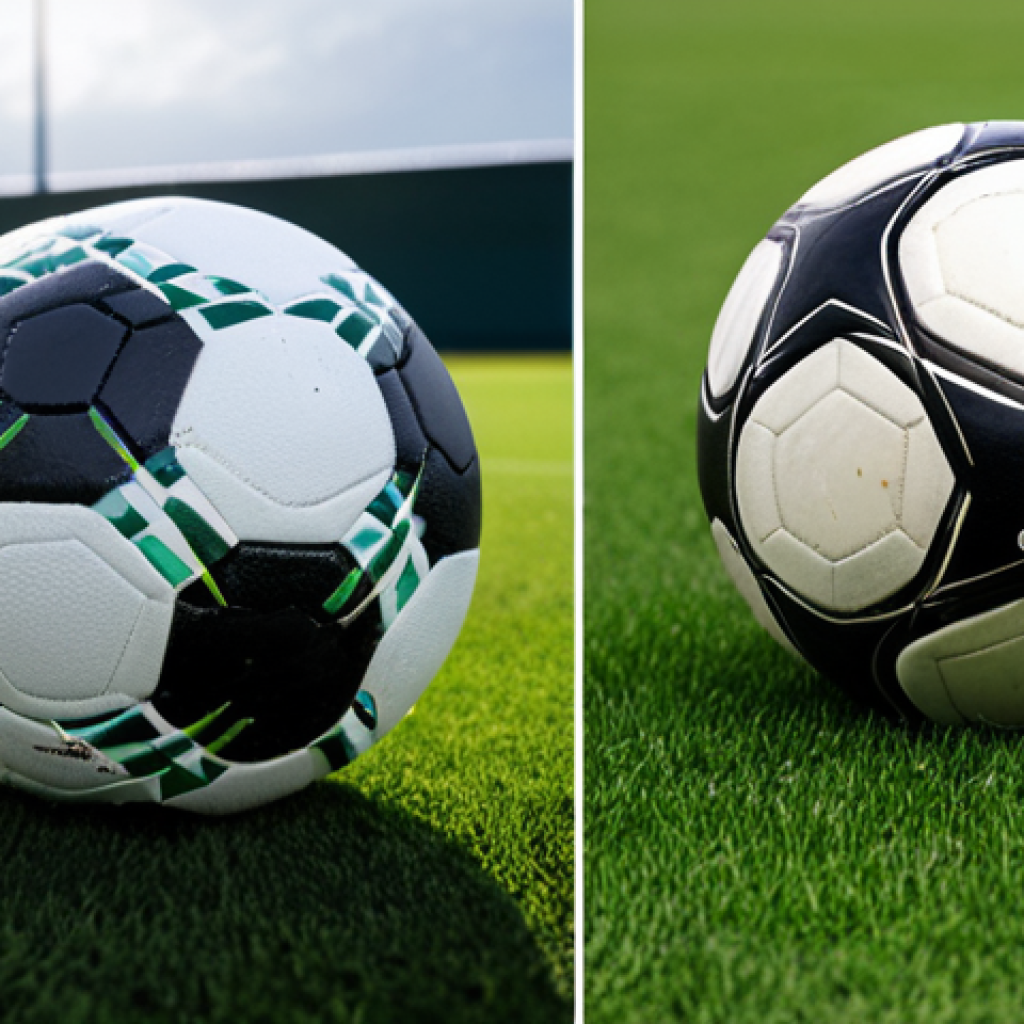
Modern soccer balls aren’t just round objects; they’re meticulously designed instruments, leveraging cutting-edge materials like advanced synthetic leathers and intricate panel geometries, often with fewer panels (think 6 or 8 instead of the traditional 32) to drastically improve aerodynamics and give players unprecedented control and accuracy.
Manufacturers are now even integrating micro-textures and dimples on surfaces to manage airflow and reduce drag, ensuring a more stable and predictable flight path, even for those knuckleball free kicks!
And get this: the future is already here with “smart balls” embedding sensors to track speed, spin, and trajectory in real-time, giving both players and coaches incredible data to refine performance.
Seriously, the way technology is reshaping the game is fascinating, and it only gets better when you consider the growing push for sustainable, eco-friendly materials in ball manufacturing.
Ready to uncover the hidden science behind every kick, dribble, and goal? Let’s dive into the fascinating world of soccer ball engineering and see how these incredible designs are literally changing the game as we know it!
The Alchemy of Outer Shells: More Than Just a Pretty Face
Honestly, when I first started playing, a soccer ball was just… a ball. You know, a round thing you kicked.
But man, have things changed! The outer layer, what we typically see and feel, is far from a simple piece of leather anymore. It’s a sophisticated blend of materials, meticulously engineered to optimize everything from touch and control to durability and water resistance.
I’ve held balls that felt like a rock in the rain, heavy and unpredictable, and then felt the feather-light, consistent performance of modern synthetic marvels.
That shift is all thanks to advancements in synthetic leathers like PU (polyurethane) and PVC (polyvinyl chloride), which have largely replaced natural leather.
These synthetics offer incredible consistency, resisting water absorption – a massive improvement from the old days when a wet leather ball felt like kicking a brick.
Moreover, these materials can be manufactured with micro-textures, like tiny dimples or grooves, that are designed to manipulate airflow over the ball’s surface.
Think about how a golf ball flies further because of its dimples; it’s a similar principle here, reducing drag and giving the ball a more stable, predictable flight path.
For us players, this means those long passes hang in the air just right, and those bending free kicks actually curve as you intend, rather than wobbling off into the stands.
It’s a game-changer, literally, giving players more confidence in their touch and shot accuracy, no matter the weather conditions. The resilience of these materials also means a single ball can withstand countless hours of intense play, saving us money and frustration.
Embracing Synthetics: The Reign of PU and PVC
Remember those old leather balls that soaked up water and became incredibly heavy? I certainly do, and my knees still ache thinking about kicking them in a downpour!
Thankfully, the days of waterlogged, inconsistent balls are largely behind us. Modern soccer balls primarily utilize advanced synthetic materials like Polyurethane (PU) and Polyvinyl Chloride (PVC) for their outer casings, and for good reason.
PU, in particular, has become the go-to for high-performance match balls because it offers a fantastic blend of softness, durability, and a consistent feel.
It’s less prone to water absorption than natural leather, maintaining its weight and shape even in soggy conditions, which is crucial for predictable play.
PVC, while generally more durable and cost-effective, tends to be stiffer and is often found in training or less expensive recreational balls. From my own experience, a good PU ball just *feels* right when you strike it, offering that perfect balance of give and responsiveness that lets you really feel the connection with the ball.
The innovation here isn’t just about making them water-resistant; it’s about creating a perfectly consistent striking surface that responds the same way, every single time you make contact, allowing for a level of precision that simply wasn’t possible with older materials.
Textural Innovations: Grip, Flight, and Feel
It’s not just the material itself, but how it’s treated and textured that makes a huge difference. You might have noticed that many modern balls aren’t perfectly smooth.
Instead, they feature subtle micro-textures, often resembling tiny dimples or grooves, across their surface. When I first saw these, I admit I was a bit skeptical – did they really do anything?
But after playing with them, the impact is undeniable. These textures aren’t just for show; they’re engineered to improve the ball’s aerodynamics. By disrupting the airflow around the ball, they can actually reduce drag and create a more stable flight path, much like the dimples on a golf ball help it travel further and straighter.
For us players, this translates to more consistent passes, more accurate shots, and fewer unpredictable swerves unless you intentionally put spin on the ball.
Beyond aerodynamics, these textures also play a role in how the ball feels to the touch and how much grip it offers. A slightly textured surface can provide better grip for goalkeepers and allow field players to get more purchase on the ball for spins and curves.
I’ve found that these subtle design elements genuinely enhance my control, especially when trying to execute tricky volleys or nuanced dribbles.
The Symphony of Flight: Panel Geometry and Aerodynamics
The shape and arrangement of a soccer ball’s panels are truly a marvel of modern engineering, and it’s something I’ve paid closer attention to over the years as I’ve seen balls change.
Gone are the days when every ball looked like the traditional 32-panel design. Now, we see everything from 6-panel to 14-panel, and even fewer, all meticulously designed to influence how the ball interacts with the air.
It’s not just about looking cool; it’s about making the ball fly straighter, faster, and more predictably. When I first kicked one of those modern, fewer-panel balls, I was genuinely surprised by how stable it felt in the air.
The reduced number of seams and the innovative panel shapes create a smoother surface, which in turn reduces turbulence and drag. This means that when you hit a long pass or a powerful shot, the ball travels through the air with less resistance, maintaining its speed and trajectory more effectively.
Think about how a perfectly streamlined car cuts through the air versus a boxy truck; it’s a similar principle at play with soccer balls. This engineering allows for those incredible long-range goals and pinpoint crosses that define modern soccer.
Manufacturers are constantly experimenting with these geometries, looking for that sweet spot that optimizes flight characteristics for both power and precision, giving players an unprecedented level of confidence in their ability to control the ball’s aerial journey.
Seam Optimization: The Less-Is-More Approach
In the past, the iconic 32-panel design (20 hexagons and 12 pentagons) was the standard, a design that actually originated from architect Buckminster Fuller’s geodesic dome.
While visually recognizable, all those seams created a lot of air resistance and could make the ball’s flight a bit less predictable. My personal experience with those older balls, especially on a windy day, often involved a lot of guesswork on how a long ball would behave.
Modern soccer ball design, however, has largely embraced a “less is more” philosophy when it comes to panels and seams. We’re now seeing high-performance balls with as few as 6, 8, or 12 panels.
The reasoning behind this drastic reduction is purely aerodynamic. Fewer seams mean a smoother overall surface area. This smoother surface reduces the amount of turbulent airflow around the ball as it travels, which in turn significantly decreases drag.
The result? A ball that maintains its speed and direction more effectively, leading to straighter shots and more accurate passes. It’s a subtle change, but one that has a huge impact on the professional game, allowing for the kind of precision that separates good players from great ones.
Thermal Bonding vs. Stitching: A Seamless Revolution
The way panels are joined together is just as crucial as their arrangement. Traditionally, panels were hand-stitched, which, while creating a durable bond, also resulted in slightly raised seams that could affect aerodynamics and water resistance.
I’ve seen my share of hand-stitched balls, and while they have a certain charm, they definitely absorbed more water and felt a bit heavier. Enter thermal bonding.
This is a revolutionary technique where panels are heat-fused together, creating a virtually seamless surface. The benefits are massive: a perfectly round sphere with consistent weight distribution, significantly reduced water uptake, and superior aerodynamic properties due to the absence of raised seams.
This seamless construction means the ball experiences less air resistance and has a more predictable flight path, even at high speeds. For players, this translates to unparalleled control and precision, especially when striking the ball.
I’ve noticed a profound difference in how a thermally bonded ball feels off my foot – it’s a much cleaner strike, and the ball genuinely goes where I want it to, with fewer surprises from unpredictable air currents.
This innovation has truly elevated the performance of soccer balls across the board.
The Heart of the Ball: Bladders, Linings, and Internal Engineering
It’s easy to focus on the surface of the ball, but what’s inside is just as critical, if not more so, to its overall performance and feel. The internal bladder, typically made of butyl or latex, is the very heart of the ball, holding the air that gives it shape and bounce.
I’ve always been fascinated by how different bladders can make a ball feel so different. A latex bladder, for instance, offers a softer touch and a more responsive bounce, giving you that ‘natural’ feel, but it tends to lose air faster.
Butyl bladders, on the other hand, are champions of air retention, meaning you don’t have to pump up your ball every single day, which is a huge convenience for any casual player or coach.
Beyond the bladder, multiple layers of lining materials, often polyester or cotton, are strategically placed between the bladder and the outer casing.
These layers are not just for added bulk; they are crucial for maintaining the ball’s shape and providing structural integrity over countless kicks and impacts.
They help distribute the impact force evenly across the ball, which contributes to a consistent feel and predictable rebound. Without these internal reinforcements, balls would quickly lose their spherical shape and become unpredictable, making accurate passing and shooting a nightmare.
The clever combination of bladder material and lining layers is what truly dictates the ball’s overall feel, its rebound characteristics, and how long it maintains its ideal playing condition.
Butyl vs. Latex: The Air Retention Battle
The choice of bladder material profoundly impacts a ball’s performance and maintenance. I’ve used countless balls with both butyl and latex bladders, and there’s a distinct difference in how they play and how often they need pumping.
Latex bladders, made from natural rubber, are prized for their exceptional feel and responsiveness. They offer a softer touch, a more dynamic bounce, and a more pronounced ‘give’ when struck, which many professional players prefer for superior control and connection with the ball.
However, the trade-off is their air retention; latex is more porous, so balls with latex bladders tend to lose air more quickly and require more frequent inflation, sometimes even daily for optimal performance.
Butyl bladders, a synthetic alternative, are the workhorses of air retention. They are far less porous, meaning they hold air for significantly longer periods, often weeks or even months without needing a top-up.
This makes them incredibly practical for training balls, recreational use, and anyone who doesn’t want to constantly check their ball’s pressure. While they might offer a slightly stiffer feel and a less ‘lively’ bounce compared to latex, their durability and low maintenance make them an excellent choice for the vast majority of players.
It really comes down to what you prioritize: ultimate feel or ultimate convenience.
The Role of Multi-Layered Linings
Sandwiched between the bladder and the outer casing, you’ll find several layers of lining material, typically made from polyester or cotton. These aren’t just filler; they are integral to the ball’s structural integrity and play a massive role in maintaining its shape and performance over time.
When I think about the sheer force a soccer ball endures during a game – powerful shots, headers, tackles – it’s incredible that they maintain their spherical shape.
That’s largely due to these linings. Each layer is carefully glued or laminated, acting as a crucial reinforcement system. They help to absorb and distribute the impact force evenly across the ball, preventing it from deforming or becoming egg-shaped after repeated use.
These layers also contribute to the ball’s overall softness and responsiveness, influencing how it feels when you strike it or control it with your foot.
A well-constructed lining system ensures that the ball maintains a consistent bounce and predictable trajectory, game after game. Without these hidden layers of engineering, even the most advanced outer casing and bladder wouldn’t be able to deliver the consistent performance we expect from a high-quality soccer ball.
The Rise of Smart Balls: Data-Driven Performance
The idea of a “smart ball” used to sound like something out of a sci-fi movie, but trust me, they are very much real and they’re already revolutionizing how we analyze and improve our game.
I remember seeing the first prototypes and thinking, “Wow, this could change everything!” These aren’t just regular balls; they’re packed with advanced sensors – accelerometers, gyroscopes, even magnetometers – that track a mind-boggling amount of data in real-time.
We’re talking about precise measurements of speed, spin, trajectory, and even the exact point of impact on the ball. This isn’t just cool tech for tech’s sake; it provides an unprecedented level of insight for both players and coaches.
Imagine being able to see, immediately after a shot, exactly how fast the ball was traveling, how much spin you put on it, and what angle it left your foot.
This kind of immediate, objective feedback is invaluable for refining technique, identifying areas for improvement, and tailoring training sessions. While they’re not yet standard in every match, smart balls are rapidly becoming essential tools in elite training environments and even for dedicated amateur players looking to seriously up their game.
They bridge the gap between intuition and hard data, offering a scientific approach to mastering the beautiful game.
Real-time Metrics: Unlocking Player Potential
The true magic of smart balls lies in their ability to provide instant, actionable data. Forget about guessing whether your shot had enough power or if your pass had the right amount of backspin; smart balls tell you with incredible accuracy.
I’ve personally seen coaches use this technology to show players, in real-time, the nuances of their technique. For example, if a player is consistently hooking their free kicks, the smart ball can immediately show them the precise angle of their strike and the amount of side-spin, helping them make immediate adjustments.
This feedback loop is incredibly powerful. Players can track their progress over time, seeing how their shot power increases or how their passing accuracy improves after specific drills.
It’s like having a personal data analyst on the field with you, constantly providing objective insights into every kick. This data isn’t just for professionals either; even for ambitious amateur players, access to these metrics can significantly accelerate skill development, turning practice into a more focused and results-driven endeavor.
Integration and Analytics: The Coach’s New Assistant
For coaches, smart balls are like having an extra set of highly analytical eyes on the field. The data collected isn’t just raw numbers; it’s integrated into sophisticated analytics platforms that can present trends, highlight inconsistencies, and even compare player performance.
I’ve heard coaches rave about how this technology allows them to move beyond subjective observation and delve into objective performance metrics. For instance, they can analyze a player’s shot speed across an entire training session, identify fatigue patterns, or even compare the effectiveness of different kicking techniques.
This allows for highly personalized training programs tailored to each player’s unique strengths and weaknesses. The ability to quantify aspects of the game that were once purely qualitative is a huge leap forward.
It means coaches can make more informed decisions about player development, tactical adjustments, and even injury prevention by monitoring consistent changes in a player’s biomechanics, all through the lens of ball data.
Sustainability on the Pitch: Greener Soccer Ball Manufacturing
It’s no secret that the environmental impact of manufacturing is a growing concern, and thankfully, the soccer ball industry isn’t immune to this vital conversation.
As someone who loves the outdoors and the game, I’ve been really encouraged to see manufacturers starting to embrace more sustainable practices. For years, the focus was purely on performance and durability, often overlooking the environmental footprint.
But now, there’s a palpable shift towards using eco-friendly materials and ethical production methods. We’re talking about things like recycled polyester for linings, bio-based polyurethanes derived from renewable resources instead of petroleum, and even natural rubber for bladders where feasible.
It’s not just about the materials themselves; it’s also about optimizing manufacturing processes to reduce waste, lower energy consumption, and minimize the use of harmful chemicals.
This movement towards sustainability isn’t just good for the planet; it’s also a smart business decision, as consumers become increasingly conscious about the products they buy.
It’s exciting to think that the very ball we kick around can be a testament to a more responsible and environmentally friendly approach to sports manufacturing.
Eco-Friendly Materials: Kicking Towards a Greener Future
The shift towards more environmentally conscious materials in soccer ball production is genuinely exciting. I’ve noticed more and more brands proudly advertising their use of recycled or bio-based components, and that’s a trend I can definitely get behind.
For instance, recycled polyester is now being used for the multiple lining layers, taking plastic waste and giving it a new life inside a high-performance product.
Similarly, there’s a growing exploration into bio-based polyurethanes for the outer casing, which are derived from renewable plant-based sources rather than finite fossil fuels.
Even natural rubber, an older material for bladders, is seeing a resurgence due to its renewability, albeit with continued efforts to ensure ethical sourcing.
These innovations aren’t just about PR; they’re about reducing the industry’s reliance on virgin plastics and petroleum-based products, which have significant environmental impacts.
From my perspective, knowing that the ball I’m playing with has been made with the planet in mind adds an extra layer of enjoyment to the game.
Ethical Production and Waste Reduction
Beyond just the materials, responsible manufacturing extends to the entire production process. It’s about ensuring that the factories making these balls operate under ethical labor conditions and that waste generation is minimized at every stage.
I’ve often wondered about the people behind the products we use daily, and it’s reassuring to know that many brands are now prioritizing fair wages and safe working environments for their employees.
On the environmental front, manufacturers are implementing strategies to reduce their carbon footprint, such as using renewable energy sources in their factories and optimizing logistics to cut down on transportation emissions.
Waste reduction is also a key focus, with efforts to recycle manufacturing scraps and design processes that minimize material offcuts. It’s a holistic approach to sustainability, encompassing not just what goes into the ball, but also how it’s made and the impact of its creation on both people and the planet.
This commitment to ethical and environmentally sound practices is, in my opinion, just as important as the ball’s performance on the field.
The Tactile Experience: Crafting Touch, Control, and Player Preference
You know, for all the science and engineering that goes into a soccer ball, ultimately, it all comes down to how it *feels* when you kick it, control it, or head it.
That tactile experience is everything for a player, and manufacturers spend countless hours trying to perfect it. I’ve played with balls that felt dead on impact, like kicking a bag of sand, and others that felt like an extension of my foot – responsive, lively, and predictable.
That difference isn’t accidental; it’s the result of meticulous design choices related to the combination of outer casing materials, lining layers, and bladder type.
The engineers are constantly trying to find that sweet spot between softness for control and firmness for power, while also ensuring consistent rebound characteristics.
A ball that’s too soft might feel great to trap, but it’ll lose shape on a powerful shot. One that’s too hard might fly like a rocket, but controlling it will be a nightmare.
It’s a delicate balance, and player feedback is absolutely crucial in this process. Different players, and different positions, often have distinct preferences.
Strikers might prioritize a ball that allows for maximum power and a clean strike, while midfielders might prefer a softer touch for intricate passing and control.
This focus on the player’s subjective experience, combined with objective performance metrics, is what truly elevates a good soccer ball to a great one.
Optimizing for First Touch and Ball Control
For me, a crucial aspect of any soccer ball is how it feels on the first touch. That initial contact can make or break a play. Manufacturers understand this deeply, which is why they engineer balls to provide optimal grip and responsiveness, allowing players to settle the ball quickly and maintain possession.
The outer casing’s material and texture, combined with the underlying layers, determine how the ball “gives” slightly upon impact, absorbing some of the energy and making it easier to control.
I’ve noticed that balls with a slightly softer feel, often achieved with high-quality PU outer layers and a more responsive bladder, allow for a much cleaner first touch.
This “give” helps the ball to stick to the foot rather than bouncing off wildly, which is invaluable for quick transitions and tight spaces. It’s a nuanced science, but one that directly translates to better control, more confident dribbling, and ultimately, more successful plays on the field.
The Perfect Strike: Power, Precision, and Feel
Beyond control, the sensation of striking the ball cleanly and powerfully is incredibly satisfying. Engineers strive to create balls that maximize this feeling, ensuring that the energy from a player’s foot is efficiently transferred to the ball, resulting in both speed and accuracy.
The firmness and elasticity of the ball’s construction, particularly the bladder and lining, play a huge role here. A well-designed ball will compress slightly upon impact and then rebound with force, propelling it forward with minimal energy loss.
From my experience, there’s nothing quite like hitting a perfectly weighted ball that feels solid yet responsive, allowing you to generate impressive power without sacrificing precision.
The aerodynamic properties also come into play, ensuring that the ball maintains its trajectory, allowing for those beautiful curling shots or thunderous long-range strikes.
It’s a synergy of internal and external engineering working together to provide that ultimate sense of power and precision with every kick.
The Ever-Evolving Design: What’s Next for Soccer Ball Tech?
It’s honestly mind-boggling to think about how far soccer balls have come, and it makes you wonder: what’s next? The pace of innovation in sports technology is relentless, and soccer balls are definitely not being left behind.
I’m always keeping an eye out for the next big thing, because every new development has the potential to subtly, or even dramatically, change how the game is played.
We’ve seen smart balls, incredibly advanced materials, and increasingly sophisticated aerodynamic designs, but I have a feeling we’re only scratching the surface.
Manufacturers are constantly pushing boundaries, exploring new frontiers in materials science, data integration, and even how balls interact with artificial intelligence.
The future could hold balls that provide even more detailed real-time feedback, perhaps even suggesting optimal striking techniques based on a player’s individual style.
Or maybe we’ll see balls made entirely from bio-luminescent materials for night games, or even self-inflating balls that always maintain perfect pressure.
It’s exciting to consider that the very core of the game – the ball itself – will continue to evolve, making the sport even more dynamic, engaging, and technologically advanced for generations to come.
Next-Gen Materials: Lighter, Stronger, Smarter
The quest for the ultimate soccer ball is intrinsically tied to the discovery and application of next-generation materials. We’re talking about advancements that could lead to balls that are even lighter without sacrificing durability, or incredibly strong yet still offer a sublime touch.
Imagine a ball made from a graphene-enhanced composite that’s virtually indestructible but still feels incredibly soft, or a self-healing outer layer that can repair minor abrasions mid-game.
I wouldn’t be surprised if we start seeing outer casings integrated with micro-sensors that don’t just track data, but actively adapt their surface properties in response to environmental conditions, like temperature or humidity.
This could mean a ball that feels consistent whether it’s scorching hot or freezing cold, or one that provides optimal grip on both wet and dry pitches.
The possibilities are truly endless, and these material innovations will undoubtedly continue to push the boundaries of performance and player experience.
AI and Personalized Ball Performance
This is where things get really futuristic, but also incredibly intriguing! Imagine a soccer ball that doesn’t just collect data, but uses artificial intelligence to analyze your playing style and even offer personalized feedback to improve your game.
Could we see balls that, through advanced sensor arrays and AI processing, could suggest subtle adjustments to your foot placement or follow-through to achieve a specific shot trajectory?
I’ve often thought about how much more quickly I could have learned certain techniques if I’d had immediate, intelligent feedback beyond what a coach could manually observe.
The integration of AI could lead to balls that understand the nuances of a player’s touch, power, and spin, providing tailored insights through connected apps.
This could revolutionize individual training, making it far more targeted and efficient, and truly democratizing elite-level performance analysis for players at all levels.
It’s a bold vision, but one that feels increasingly within reach as AI continues to permeate every aspect of technology.
| Feature | Traditional (e.g., Early 20th Century) | Modern (e.g., 2020s) |
|---|---|---|
| Outer Casing Material | Natural Leather | Advanced Synthetic PU (Polyurethane), sometimes PVC (Polyvinyl Chloride) |
| Panel Construction | Hand-stitched, typically 18 or 32 panels | Thermally bonded or machine-stitched, 6-14 panels (often fewer than 32) |
| Water Resistance | Poor (heavy water absorption) | Excellent (minimal water absorption) |
| Flight Characteristics | Less predictable, prone to wobbling, high drag | More stable, predictable trajectory, reduced drag due to seamless construction and micro-textures |
| Internal Bladder | Natural Rubber (Latex) or sometimes animal bladder | Butyl (for air retention) or Latex (for softer feel) |
| Internal Linings | Minimal or basic cotton layers | Multiple layers of polyester or cotton for shape retention and structural integrity |
| Smart Technology | None | Integrated sensors for tracking speed, spin, trajectory (in specialized balls) |
| Sustainability Focus | Minimal | Increasing use of recycled and bio-based materials, ethical production practices |
Closing Thoughts
Wow, what a journey we’ve been on, right? From humble leather spheres to the high-tech marvels we kick around today, soccer balls have truly undergone an incredible transformation. It’s been fascinating to see how every tiny detail, from the outer casing to the internal bladder, plays a crucial role in shaping our game. As someone who lives and breathes soccer, experiencing these advancements firsthand has been nothing short of amazing, and I genuinely can’t wait to see what brilliant innovations the future holds for this beautiful sport!
Handy Tips & Must-Knows for Every Player
1. Check Your Pressure: An under-inflated ball feels dead and affects your power, while an over-inflated one is tough to control and can even burst. Always check the recommended PSI (pounds per square inch) printed near the ball’s valve. Trust me, it makes a huge difference!
2. Choose Wisely for Your Playstyle: If you prioritize a soft, responsive touch for intricate passing, lean towards balls with a high-quality PU outer casing and a latex bladder. For sheer durability and less frequent pumping, especially for training sessions, a PVC casing with a butyl bladder is often your best friend.
3. Keep it Clean: A clean ball isn’t just for showing off; dirt and grime can subtly impact its aerodynamics and how it feels to touch. A quick wipe-down with a damp cloth after playing can extend its life and maintain its optimal performance characteristics.
4. Store it Smartly: Avoid leaving your prized possession in direct sunlight or extreme temperatures, like baking in a hot car trunk. Harsh conditions can degrade materials, leading to cracks or even misshapen balls over time. A cool, dry place is always ideal.
5. Surface Specifics: Remember that not all balls are created equal for every pitch. A weighted Futsal ball is perfect for indoor courts, while a standard match ball shines on natural grass. Using the right ball for the right surface will dramatically improve your playing experience and ensure your ball lasts longer.
Key Takeaways
- Evolutionary Leap: Modern soccer balls are a far cry from their predecessors, embodying advanced engineering principles for peak performance.
- Material Innovation: Synthetic materials like PU and PVC offer superior water resistance, durability, and a consistent feel, often enhanced with micro-textures for improved grip and aerodynamics.
- Aerodynamic Mastery: Fewer, thermally bonded panels create a smoother surface, significantly reducing drag and resulting in a more predictable, stable flight path for passes and shots.
- Internal Engineering: The combination of specialized bladders (butyl for air retention, latex for feel) and multi-layered linings ensures consistent shape, bounce, and overall responsiveness.
- Future-Forward: The industry is embracing “smart ball” technology for data-driven performance analysis and is increasingly focused on sustainable manufacturing practices, using eco-friendly materials and ethical production.
- Player-Centric Design: Every advancement ultimately aims to enhance the player’s tactile experience, optimizing first touch, control, power, and precision to truly elevate the beautiful game.
Frequently Asked Questions (FAQ) 📖
Q: How have soccer balls truly evolved over the years, and what’s the biggest difference we feel on the pitch today?
A: Oh man, where do I even begin? It’s like comparing a rotary phone to the latest iPhone! When I first started kicking a ball, we were still dealing with those chunky, sometimes inconsistent leather spheres.
Remember how they’d get waterlogged in the rain, becoming heavy and unpredictable? It was tough! But fast forward to today, and we’re playing with what feels like a perfectly calibrated instrument.
The biggest shift, in my opinion, is the consistency and predictability. Modern balls, with their advanced synthetic leathers and fewer, thermally bonded panels, aren’t just round; they’re designed to fly truer, without those weird wobbles that used to send a perfectly hit shot wide.
This means players can trust the ball more, leading to more audacious long-range passes, pinpoint crosses, and those incredible bending shots we see every weekend.
It genuinely feels like the ball is an extension of your foot now, responding precisely to every touch, which totally changes the dynamics of the game for the better.
Q: What kind of “cutting-edge tech” are manufacturers putting into these new soccer balls to make them so precise? Is it all just marketing hype?
A: Absolutely not hype, my friend! It’s genuinely mind-blowing what goes into these balls. Manufacturers are practically treating them like aerospace engineering projects.
We’re talking about incredibly sophisticated synthetic leathers that are not only durable but also incredibly consistent in their texture and rebound, unlike natural leather which could be a bit variable.
But here’s where it gets really cool: the panel geometry! Gone are the days of the standard 32 panels. Now, we see fewer, larger panels – sometimes just 6 or 8 – that are thermally bonded, not stitched.
This reduces water uptake (no more soggy sponges!) and creates a smoother, more aerodynamic surface. And if you look closely, you’ll often find micro-textures or tiny dimples on the surface, just like a golf ball!
These aren’t just for show; they’re strategically placed to manage airflow, reduce drag, and stabilize the ball in flight. From my own experience, I’ve noticed how much more stable my knuckleball free kicks are, and how much easier it is to put spin on the ball.
It’s all about giving players that extra edge in control and accuracy, and honestly, you can feel the difference with every strike.
Q: “Smart balls” with sensors sound like something out of a sci-fi movie.
A: re they actually useful, or are they just a novelty for professional teams? A3: I totally get why they might sound a bit futuristic, but believe me, “smart balls” are far from just a novelty; they’re a legitimate game-changer, and not just for the pros!
I’ve had the chance to kick around a few, and the real-time data they provide is seriously insightful. Imagine instantly knowing the exact speed of your shot, the spin rate on your free kick, or even the precise trajectory of your pass.
For coaches, this is gold for refining training drills and giving objective feedback. For players, especially aspiring ones, it’s an incredible tool for self-improvement.
You can track your progress, identify weaknesses you might not even realize you have, and optimize your technique with data-driven precision. While they’re definitely making waves at the elite level, helping teams analyze every aspect of play, I truly believe these smart balls are going to become increasingly accessible and revolutionize how players at all levels train and understand their own performance.
It’s like having a personal coach packed into the ball itself, and that’s a pretty powerful tool if you ask me!
📚 References
Wikipedia Encyclopedia
구글 검색 결과
구글 검색 결과
구글 검색 결과
구글 검색 결과
구글 검색 결과